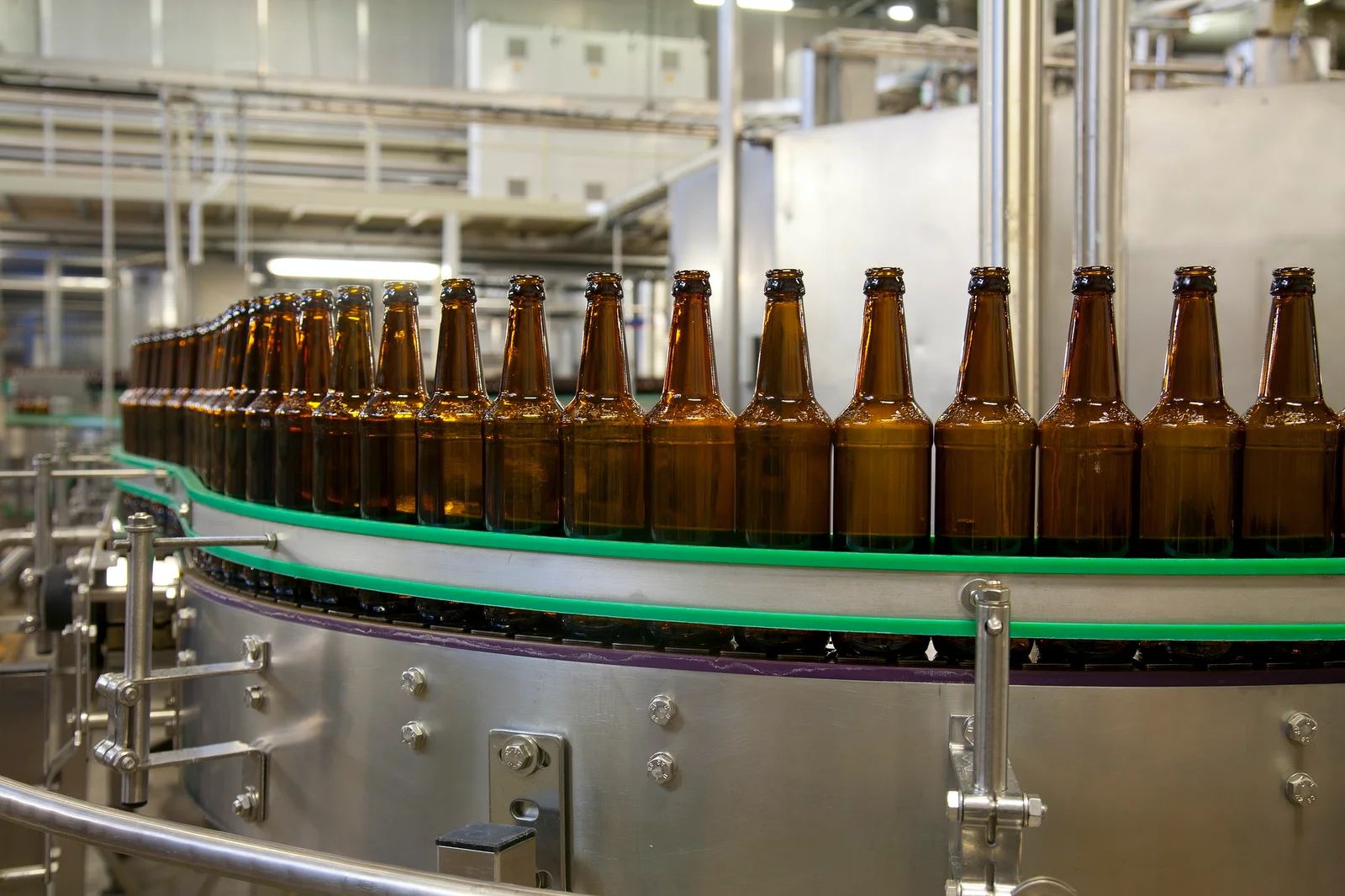
Craft beer equipment in 2026 is moving toward automated controls, continuous sensors, lower utility use, modular production, low-oxygen packaging, and equipment that handles more than one beverage type. A 2026 peer-reviewed brewery electrification study modeled process heat demand at 21.4 kWh/hl and found integrated heat-pump systems could reduce electrical demand for process heat to about 3.6–5 kWh/hl. Commercial reverse-osmosis dealcoholization equipment now operates around 10–15°C, reaches 0.05% ABV, and scales beyond 50 hl/h. At the same time, PLC controls, inline density measurement, automated CIP, heat recovery, and packaging oxygen measurement are moving from large breweries into smaller production systems.
Cost pressure is one reason the equipment mix is changing. Brewers Association data published in 2026 put U.S. craft production at 22.034 million barrels for 2025, down 4% from the previous year, while 60% of breweries reported lower production. Rather than buying larger vessels simply to add capacity, many operators are looking at equipment that cuts labor per batch, shortens cleaning cycles, records quality data, or supports several products on the same production floor.
That shift starts in the brewhouse, where PLC-based controls can manage mash temperature, pump speed, valve position, wort transfer, heating stages, and recipe timing from one interface. Variable-frequency drives let a pump run at the flow needed for a particular stage instead of operating continuously at full speed, while digital flow meters provide repeatable liquor-to-grist and transfer volumes.
A modern 10–30 bbl craft brewhouse can therefore automate repetitive steps without removing the brewer from recipe control. Recorded setpoints also make batch comparison easier: when brewhouse efficiency drops from 82% to 76%, the brewer can review mash temperature, runoff rate, wort volume, gravity, and timing instead of relying only on handwritten notes.
Automation works best when it records what physically happened in the process, not only what the recipe told the equipment to do.
That requirement is increasing demand for inline measurement. Temperature and pressure were once the main continuously measured variables in many small breweries; newer installations can add density, conductivity, turbidity, flow, dissolved oxygen, pH, tank level, and CO₂-related measurements at selected stages.
Continuous density measurement is especially useful during fermentation because a reading every few minutes gives a much clearer curve than one manual sample per day. A fermentation that normally moves from 14°P to 3°P in five days can be compared against previous batches by hour, helping staff notice a slower gravity decline before the packaging schedule is affected.
More measurement produces more useful information only when equipment can share it, which is why control architecture is becoming more important. Ethernet-based PLC networks, digital batch records, alarm histories, recipe storage, remote tank monitoring, and production dashboards allow a brewer to view one batch across brewing, fermentation, conditioning, CIP, and packaging rather than operating each machine as a separate island.
The economic setting also favors that approach. The Brewers Association's 2026 midyear estimate, based partly on responses from more than 600 breweries representing roughly 20% of industry volume, showed craft volume down 4% during the first six months of 2026. Equipment that can support more output with the same small production team is therefore receiving more attention than capacity alone.
| Equipment area | What newer systems measure or control | Practical production use |
|---|---|---|
| Brewhouse | temperature, flow, pump speed, valve state | repeatable mash and transfer profiles |
| Fermentation | density, pressure, temperature | earlier detection of abnormal fermentation |
| CIP | conductivity, temperature, flow, time | controlled chemical concentration and rinse endpoints |
| Packaging | dissolved oxygen, fill level, pressure | lower oxygen pickup and more consistent packages |
| Utilities | electricity, refrigeration and heat flow | energy use measured per hl rather than only per month |
Once production data are available, utility consumption becomes easier to examine batch by batch. The 2026 Energy Conversion and Management study by Padullés and colleagues modeled a generalized brewery with 21.4 kWh/hl of total heat demand; three electrification layouts reduced required electricity for thermal processes to approximately 5–3.6 kWh/hl through heat pumps, heat recovery, and, in the most integrated design, mechanical vapor recompression.
The useful engineering point is not that every craft brewery should replace its boiler. A brewery running five days per week at high utilization has a different payback profile from a taproom brewing twice per month, so equipment sizing depends on hot-water demand, refrigeration load, electricity prices, fuel prices, annual hectoliters, available electrical service, and the temperature required by each process.
Heat recovery therefore tends to appear before full electrification. Wort leaving the whirlpool may enter the heat exchanger above 90°C and leave near fermentation temperature, while incoming brewing water absorbs much of that heat. Storage tanks can retain recovered hot water for the next mash, vessel cleaning, or other sanitary work instead of sending the thermal energy to the drain.
Water use follows the same measurement-first approach. Breweries consume water in brewing, rinsing, CIP, packaging, floor cleaning, filtration, cooling, and utility systems, while wastewater charges can exceed the cost of incoming water in some U.S. municipalities. Brewers Association guidance notes that breweries can lower wastewater billing where authorities allow documented deductions for water leaving in finished beer, kettle evaporation, or spent-grain moisture.
CIP equipment has consequently become more instrumented. Conductivity sensors can distinguish chemical solution from water, temperature probes confirm cleaning conditions, automated dosing controls chemical concentration, and programmed valve sequences send the solution through the required circuit without an operator manually rebuilding every route.
A fixed 30-minute rinse is not always the most efficient endpoint. When conductivity returns to the brewery's validated rinse-water range after 18 minutes, a properly designed system can use the measurement as part of its established cleaning procedure; across hundreds of tank cycles per year, minutes of water, pump operation, heating, and labor become measurable operating quantities.
Three equipment features are appearing together more often because they reduce manual handling while keeping the process verifiable:
-
automated valve and pump sequencing tied to stored recipes;
-
sensor records that show temperature, flow, conductivity, pressure, or density over time;
-
modular skids that can be serviced or expanded without replacing an entire production line.
Modular construction also fits an industry where production requirements can change faster than a stainless-steel vessel wears out. A brewery may need another four fermenters before it needs a larger brewhouse, or a faster canning line before increasing cellar volume; skid-mounted filtration, CIP, deaerated-water, pumping, carbonation, and utility systems let those areas be expanded separately.
That flexibility extends beyond beer. A Brewery/Distillery/Winery All-In-One Solution can be considered where a facility wants shared stainless-steel processing, temperature control, pumps, cleaning infrastructure, or utility systems for more than one beverage category, although product-contact design and sanitation requirements still need to match the liquids actually processed.
Low- and non-alcoholic beer adds another reason for flexible equipment. Brewers Association material published in 2026 cited NIQ tracking 213 companies selling non-alcoholic beverage brands in 2025, up 134% from 91 companies in 2021, while most existing volume still came from brands launched before 2024. That creates room for equipment intended for smaller production runs rather than only high-volume dedicated plants.
Reverse osmosis is one of the more established equipment routes. GEA specifies AromaPlus operation at approximately 10–15°C, with systems ranging from roughly 50 hl batch processing to continuous capacity of 50 hl/h or more; depending on configuration, ethanol can be reduced to 0.5% or 0.05% ABV. Low processing temperature limits the thermal exposure associated with evaporation-based methods.
Membrane systems also show how equipment design is moving toward integrated CIP and automation. The same commercial platform combines reverse-osmosis modules, pumps, internal piping, CIP dosing, control hardware, touchscreen operation, and batch or continuous configurations on a modular frame, reducing the amount of separate engineering required after installation.
Cold-side equipment is developing around a different measurement: oxygen in parts per billion rather than parts per million. After fermentation, oxygen introduced through pumps, poorly purged tanks, filters, hoses, filler bowls, or package headspace can accelerate flavor and aroma changes, so breweries increasingly measure dissolved oxygen before packaging and total package oxygen after filling.
A commonly used technical target is 50 ppb or less in finished beer before or around packaging, although the appropriate specification depends on beer style, process, equipment, and expected shelf life. Achieving low numbers requires more than buying a meter; closed transfers, CO₂ or nitrogen purging, deaerated water, correct pump operation, stable filler pressure, controlled foam, and well-maintained seams or closures all affect the reading.
Packaging machines are therefore being evaluated on more than cans per minute. A 20-can-per-minute filler that produces repeatable fills with low oxygen pickup, fast sanitation, reliable seams, and limited beer loss may fit a small brewery better than a nominally faster line that needs more operators or loses more product during startup and changeovers.
The same thinking applies to brewhouse efficiency. Brewers Association guidance notes that a 10% increase in extract efficiency can approach a similar reduction in malt requirement under suitable recipe conditions; its example shows that a seven-barrel batch may save about one 50-pound bag of malt when extract efficiency improves by 10%. Equipment data make that difference easier to identify across repeated batches.
Maintenance is also moving into the control system. Modern pumps, chillers, compressors, conveyors, and packaging equipment can record run hours, motor status, temperature, pressure, alarms, and service intervals, allowing staff to service equipment based partly on actual operating history instead of maintaining every component on the same calendar schedule.
For a brewery producing 300 bbl per year, the appropriate level may be simple pump-hour and refrigeration-alarm logging; Brewers Association reporting in 2026 placed the median U.S. brewery near that 300-bbl annual scale. A plant producing more than 10,000 bbl can justify more extensive historian software, spare-parts records, maintenance scheduling, and sensor-based condition monitoring because downtime affects many more barrels.
Artificial-intelligence features are beginning to appear around those data systems, but their usefulness depends on measurement quality. A model comparing 200 fermentation batches can identify an unusual temperature or gravity pattern only if sensors were calibrated, product names were recorded consistently, timestamps were accurate, and recipe revisions were separated rather than mixed into one dataset.
For most craft breweries, better instrumentation therefore comes before more advanced software. A reliable flow meter, density sensor, oxygen meter, and properly configured PLC can improve production control without requiring a fully autonomous brewery, while the stored data remain available for later scheduling, maintenance, energy, and process-analysis tools.
Equipment purchases are also being judged against a tighter market than during the brewery-opening boom. U.S. craft production fell 4% in 2025, retail craft value declined 2.8% to about $28.0 billion, and employment decreased by roughly 3% to 191,000 jobs; craft still represented 13.4% of beer volume and 24.8% of retail beer dollar sales.
A useful equipment specification therefore includes measurable operating numbers: kWh/hl, water used per hl, cleaning minutes per vessel, extract efficiency, product loss during changeover, dissolved oxygen before and after packaging, labor hours per batch, maximum and normal throughput, utility demand, and expected annual operating hours. A machine rated for 40 bbl/h provides limited information if the surrounding pumps, glycol system, electrical supply, floor drains, or packaging equipment cannot support that rate.
The technology direction visible in 2026 is consequently less about adding one sophisticated machine and more about making brewing, cellar, packaging, cleaning, and utilities communicate through measurable process data. When heat recovery lowers thermal demand, CIP instruments shorten verified cleaning cycles, fermentation sensors reduce manual sampling, and packaging instruments hold oxygen within a defined specification, equipment performance can be compared batch by batch rather than judged mainly by nameplate capacity.